How Often Should You Seal Pavers in Florida? (UV & Humidity Guide)
By Al Spicer, Tampa Terrazzo | Published November 04, 2026 | 6–7 min read
⚡ Quick Answer
Quick answer: In Florida, pavers should typically be resealed every 2 to 3 years. Intense UV, high humidity, frequent rain, and heavy use can shorten that to 1 to 2 years, while shaded, low-traffic areas may stretch to 3 or 4. The best test is simple: if water no longer beads on the surface, the sealer has worn off.
Pavers are a big investment, and Florida is one of the hardest places in the country to keep them looking new. Whether you have a paver driveway, a paver patio, or paver walkways, sealing protects color, blocks stains, limits weeds and algae, and locks in the joint sand. The real question is how often to do it, because sealing too late costs you color and surface, and sealing too early can leave a cloudy, sticky finish.
At Tampa Terrazzo, we've spent 48 years caring for stone and hard surfaces across Florida, and our hardscaping services build on that experience. Here's what actually drives sealer lifespan in our climate and how to know when it's time.
Why Florida Is Harder on Paver Sealer Than Most Places
Most sealing advice online is written for temperate states. Florida plays by different rules.
- Intense, year-round UV exposure. Florida sun breaks down the polymers in sealers over time. Ultraviolet light causes sealer to yellow, haze, and thin out, especially on south- and west-facing driveways and pool decks that get sun most of the day. Unlike northern states, there's no long winter break from UV.
- Constant humidity and moisture. Pavers are porous. Humidity, daily afternoon storms, and hurricane-season rain keep moisture moving in and out of the surface. That cycling stresses the sealer film and can cause cloudiness (often called “blushing”) if moisture was trapped when the sealer was applied. It also feeds algae, mildew, and mold on any surface the sealer no longer protects.
- Heat and thermal swings. Hot pavers expand and cool rapidly during storms. Over time, that movement wears film-forming sealers faster.
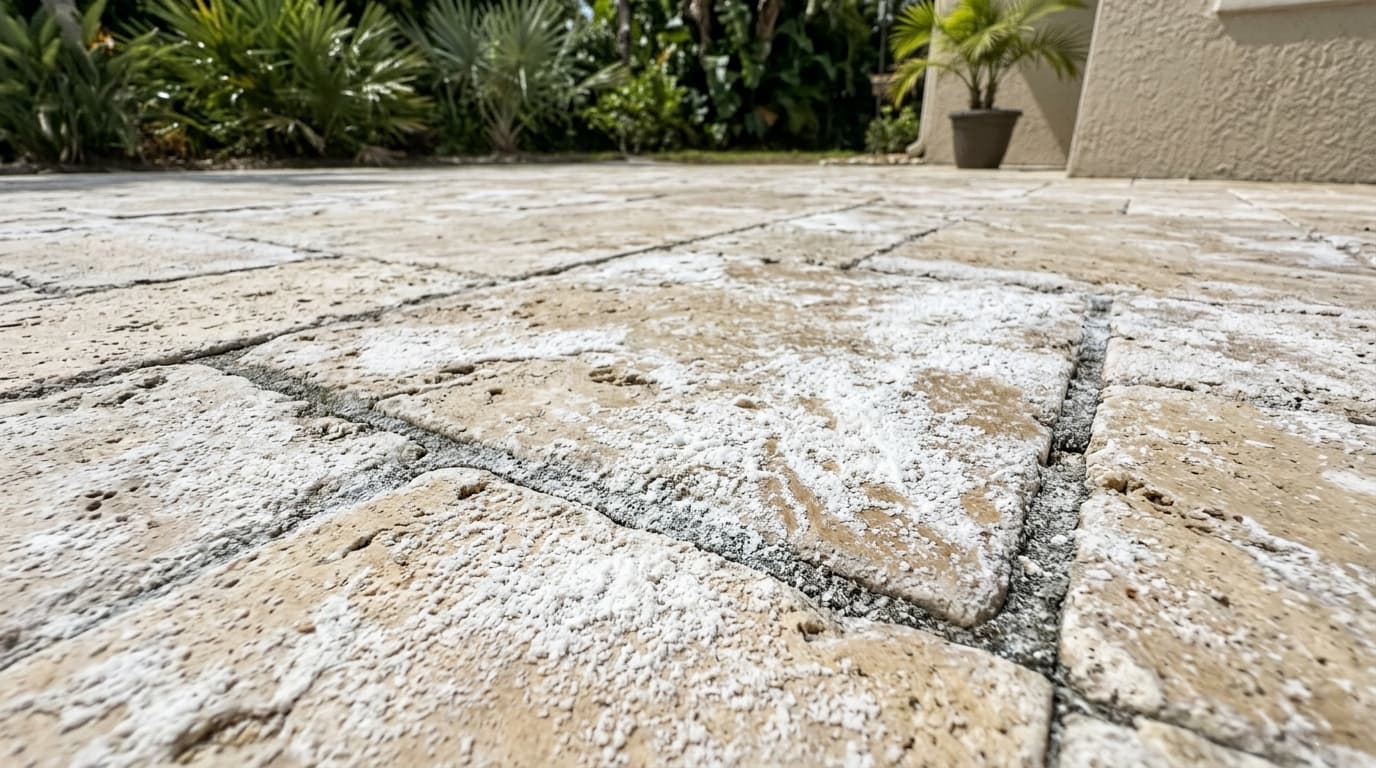
- Sandy soil and salt air. Near the Gulf and coastal areas, salt and airborne grit act as a mild abrasive, and efflorescence (white mineral haze) is common when moisture moves through the paver.
The Typical 2-3 Year Reseal Cycle (And Why)
The 2-3 year guideline exists because a sealer is a sacrificial layer. It takes the UV, moisture, foot traffic, and chemical exposure so the paver doesn't. In Florida, that layer wears at a predictable pace:
- Year 1: Sealer is at full strength, with strong water beading and color enhancement.
- Year 2: UV and weather begin thinning the film, and high-traffic spots dull first.
- Year 3: Protection is patchy. Stains absorb more easily, algae returns, and color fades.
Resealing on schedule is far cheaper than waiting. Once pavers are stained, sun-bleached, or sprouting weeds in the joints, you're paying for paver restoration, including deep cleaning, joint sand replacement, and sometimes color restoration, before the sealer can even go on.
Factors That Shorten or Extend the Interval
| Factor | Effect on Sealer Life | What to Expect |
|---|---|---|
| Direct, all-day sun | Shortens | Plan on reseal every 1.5-2.5 years |
| Pool chemical contact | Shortens | Chlorine and salt water break down sealer near pool edges |
| Heavy vehicle traffic | Shortens | Driveways wear faster than patios |
| Frequent pressure washing | Shortens | Aggressive washing strips sealer early |
| Partial or full shade | Extends | Can reach 3-4 years, but watch for algae |
| Low foot traffic | Extends | Courtyards and side patios last longer |
| High-quality sealer, properly applied | Extends | Good prep matters as much as the product |
| Applied only in dry conditions | Extends | Trapped moisture causes early failure |
Pool deck pavers deserve special mention. Chlorine, salt, sunscreen, and constant wet-dry cycles make them the first area to fail. Many Florida pool decks need attention every 1-2 years, and non-slip performance should be checked at the same time.
Signs Your Paver Sealer Has Worn Off
You don't need a calendar to know when it's time. Look for these:
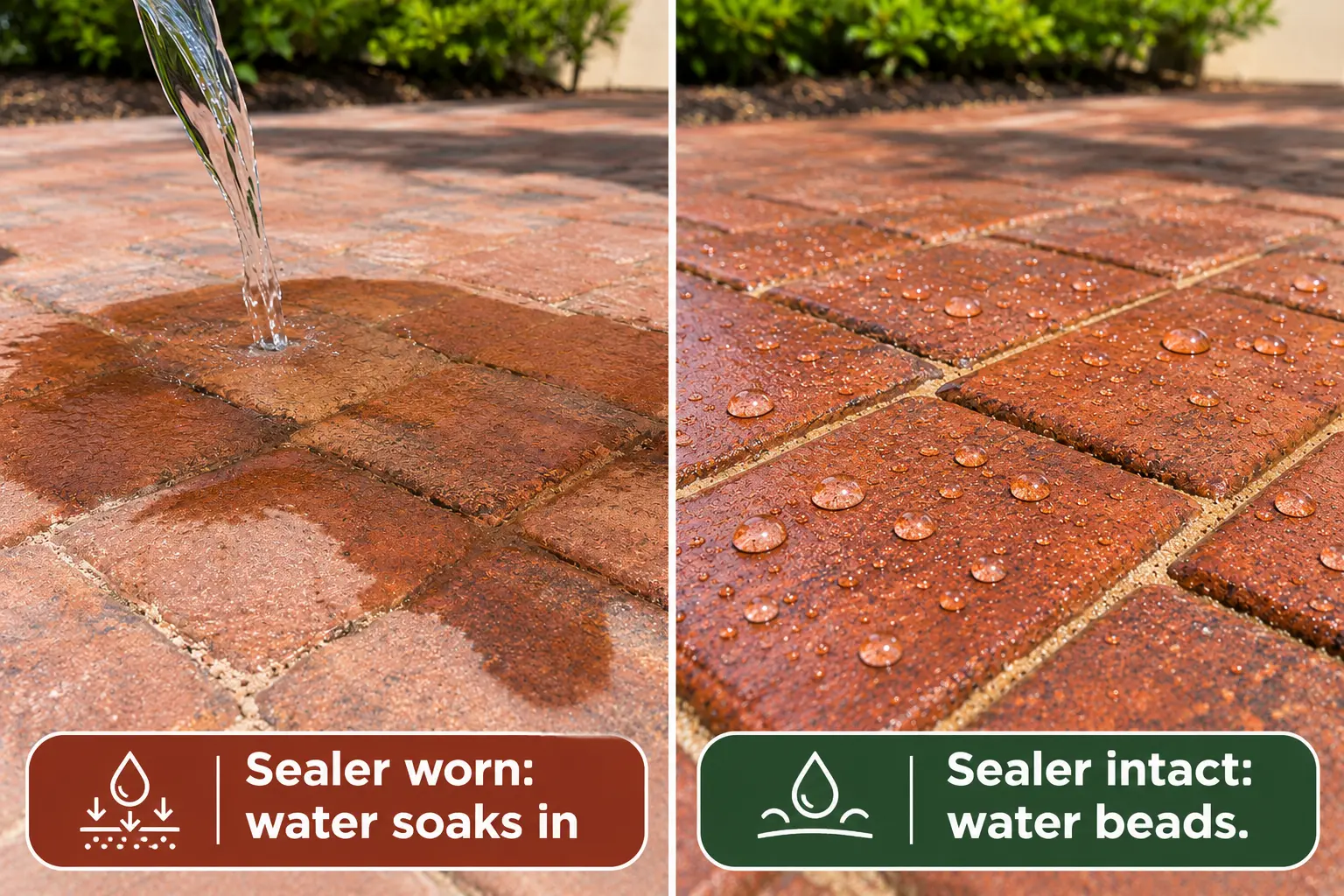
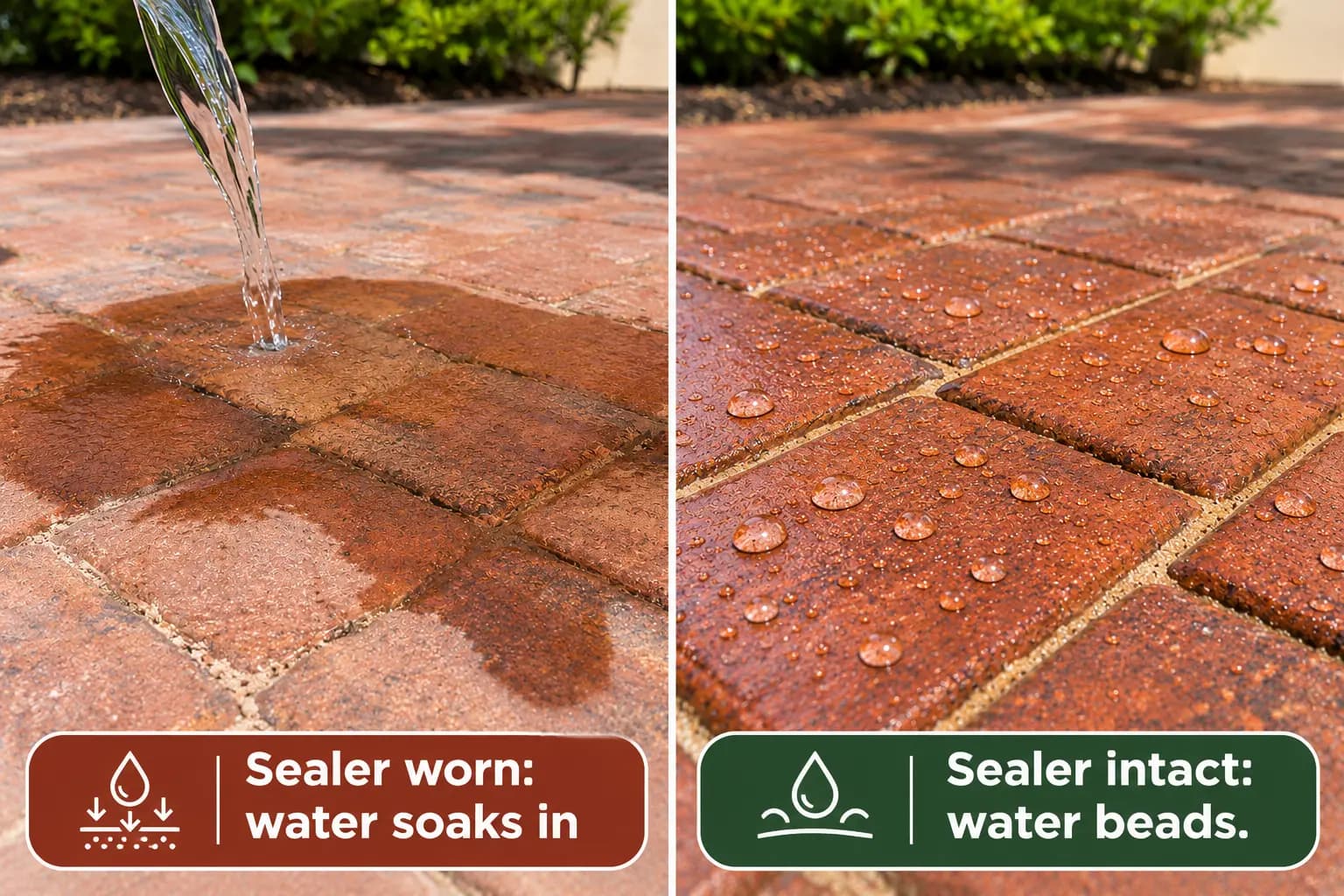
- Water no longer beads. Sprinkle water on the surface. If it soaks in and darkens the paver within a minute or so, the sealer is gone.
- Faded or chalky color. Pavers look washed out, especially compared with a shaded area.
- Stains absorb easily. Oil, rust, and leaf tannins set in instead of wiping off.
- Weeds and moss in the joints. Joint sand is loosening, which means sand-stabilizing protection has failed. Adding joint sand stabilization during a reseal helps prevent this.
- Algae and mildew return quickly after paver cleaning and pressure washing.
- Patchy sheen. High-traffic lanes look dull while other areas stay glossy.
- Rough, sandy surface from paver wear or loose sand.
If you also see sunken, shifting, or cracked pavers, sealing alone won't fix it. That's a job for paver repair, and the base should be corrected before any sealer goes on.
Best Sealer Types for Florida's Climate
Not all sealers handle Florida the same way. Here's how the main options compare:
- Water-based acrylic sealers: Easier to apply, lower odor, and breathable, which helps with moisture. Good for homeowners, though they typically need more frequent reapplication in strong sun.
- Solvent-based acrylic sealers: Deeper color enhancement and a richer “wet look.” They can last longer but may trap moisture if applied incorrectly, so surface dryness is critical in humid conditions.
- Penetrating (impregnating) sealers: Soak in rather than form a film, so they don't peel or yellow. Excellent for natural look, stain resistance, and moisture breathability, but they don't add sheen.
- Polyurethane or epoxy-based sealers: Very durable for high-traffic or commercial areas, but demand professional application.
What to look for in Florida: UV-stable formulation, breathability to let trapped moisture escape, and a slip-resistant finish for pool decks and walkways. Our paver sealing services in Tampa match the product to your paver type, sun exposure, and the look you want.
Concrete slabs around your pavers, such as garage aprons and pool coping, face the same sun and moisture. Concrete sealing on those surfaces keeps the whole outdoor space protected on the same schedule.
How Much Does It Cost to Reseal Pavers in Florida?
Costs vary by size, condition, and sealer type. As a general market range:
- Reseal only (clean, existing pavers in good shape): roughly $1.50-$3.50 per square foot
- Cleaning + joint sand + sealing: roughly $2.50-$5.00+ per square foot
- Pool decks and specialty/non-slip finishes: typically toward the higher end
A typical Florida driveway or patio of 500-1,000 sq ft often lands in the $750-$4,000 range depending on prep work.
What drives the price: how much cleaning is needed, whether joints need re-sanding, stain or efflorescence removal, sealer type, and access. The best way to save money is to reseal on time, before prep costs climb.
Can You Reseal Pavers Yourself?
You can, but Florida makes DIY riskier. The most common failures we see are sealing over damp pavers (causing cloudy, milky patches), applying too thick (leaving a sticky or peeling film), and using the wrong sealer for the exposure. If you do it yourself, clean thoroughly, let pavers dry fully (check the forecast for 24-48 hours of dry weather), and apply thin, even coats.
Planning a new project? Proper paver installation with the right base, drainage, and a first sealing after the joints settle gives you the longest-lasting result.
Frequently Asked Questions
How often should you seal pavers in Florida? ▼
Most Florida pavers need resealing every 2 to 3 years. Full-sun driveways and pool decks may need it every 1 to 2 years, while shaded areas can last 3 to 4.
Is sealing pavers worth it in Florida? ▼
Yes. Sealer protects against UV fading, stains, algae, and weeds, and it helps lock joint sand in place. Resealing on time costs much less than restoring neglected pavers.
How do I know if my pavers need to be resealed? ▼
Pour water on them. If it soaks in instead of beading, the sealer has worn off. Faded color, weeds in joints, and quick stain absorption are other signs.
Can I seal pavers in humid weather? ▼
It's risky. Pavers must be completely dry, and high humidity or recent rain can trap moisture and cause a cloudy finish. Early morning or dry stretches with low humidity work best.
Does sealing pavers make them slippery? ▼
Some film-forming sealers can, especially on pool decks. Ask for a slip-resistant or textured finish for wet areas.
How long does paver sealer last on a pool deck? ▼
Often 1 to 2 years, because of chlorine, salt, sunscreen, and constant sun and water exposure.
What's the best paver sealer for Florida heat? ▼
A UV-stable, breathable sealer suited to your paver type and sun exposure. Water-based acrylics and penetrating sealers are common choices, with solvent-based or urethane options for higher-wear areas.
Should I pressure wash before sealing? ▼
Yes, always. Sealer must go on clean, dry pavers with the joints filled. Use moderate pressure so you don't damage the surface or strip joint sand.
Ready to Protect Your Pavers?
Tampa Terrazzo has cared for Florida stone and hard surfaces for 48 years. If your pavers are fading, staining, or losing joint sand, we'll assess the surface, recommend the right sealer for your sun and moisture conditions, and give you a clear quote.
Recent Posts
How Often Should You Seal Pavers in Florida? (UV & Humidity Guide)
Marble Etching Explained: Causes, Prevention & How to Fix It

Your Go-To Concrete Care Guide
How to Choose the Best Floor Restoration Company